Problem
You need to support resource-hungry objects, and you do not want to instantiate such objects unless and until they are actually requested by the client.
Discussion
Design a surrogate, or proxy, object that: instantiates the real object the first time the client makes a request of the proxy, remembers the identity of this real object, and forwards the instigating request to this real object. Then all subsequent requests are simply forwarded directly to the encapsulated real object.
There are common situations in which the Proxy pattern is applicable.
- A virtual proxy is a placeholder for “expensive to create” objects. The real object is only created when a client first requests/accesses the object.
- A protective proxy controls access to a sensitive master object. The “surrogate” object checks that the caller has the access permissions required prior to forwarding the request.
- A smart proxy interposes additional actions when an object is accessed. Typical uses include:
- Counting the number of references to the real object so that it can be freed automatically when there are no more references (aka smart pointer),
- Loading a persistent object into memory when it’s first referenced,
- Checking that the real object is locked before it is accessed to ensure that no other object can change it.
Structure
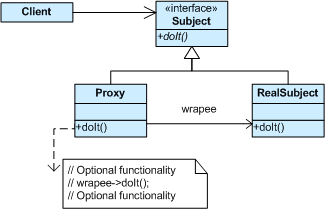
By defining a Subject interface, the presence of the Proxy object standing in place of the RealSubject is transparent to the client.
Example
The Proxy provides a surrogate or place holder to provide access to an object. A check or bank draft is a proxy for funds in an account. A check can be used in place of cash for making purchases and ultimately controls access to cash in the issuer’s account.


No comments:
Post a Comment